
Magic Museum
P.C. Sorcar: The Indian Magician Who Made Britain Panic
In 1956, a man from Bengal walked onto the BBC's Panorama and caused a national meltdown, daring the world to underestimate him one more time.
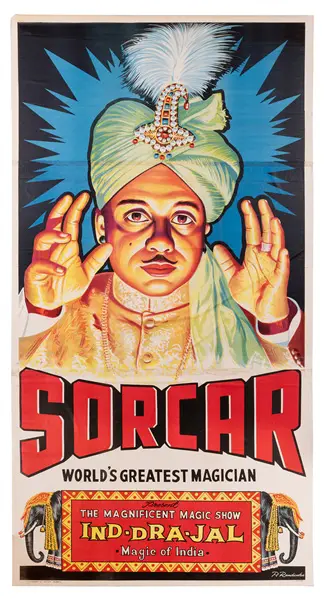
In 1956, a man from Bengal walked onto the BBC's Panorama and caused a national meltdown.
His assistant lay on a table. He raised a buzzing electric saw. The blades came down and the screen cut to black. The BBC switchboard lit up instantly. Had she actually died? Was it real? It was, of course, an illusion. But the panic was completely real.
That was P.C. Sorcar. And that was kind of his whole deal.
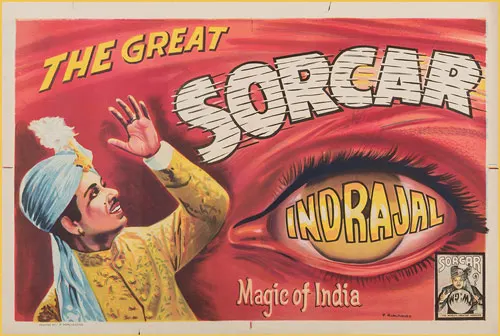
Born Protul Chandra Sorcar in 1913 in what is now Bangladesh, he was a math prodigy who was supposed to become an engineer. Instead, he became obsessed with street conjurers, not watching them, but reverse-engineering them. By his twenties, he'd renamed himself "Sorcar" (because it sounded like sorcerer), declared himself "The World's Greatest Magician" with zero shame, and started booking shows.
The audacity worked.
His shows, called Indrajal, meaning "illusion" in Sanskrit, were unlike anything audiences had seen. Stages built to look like the Taj Mahal. Elephants with painted trunks. Assistants in Mughal costumes. His signature tricks became iconic: an earthen pot that refilled itself no matter how many times you emptied it, a blindfolded Sorcar solving math problems and reciting Shakespeare on the spot, and of course, the saw.
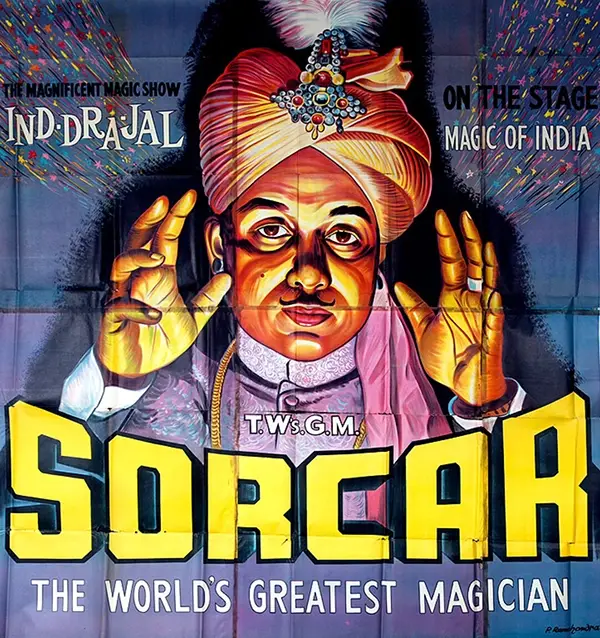
What made him special wasn't just the tricks. It was the context. At the time, the Western world saw India as a land of snake charmers and street fakirs, quaint, primitive, not to be taken seriously. Sorcar walked into the grandest theatres of London, Tokyo, and New York and essentially said: look again.
He performed for royalty. He got full-page reviews in the Daily Mirror. When he arrived in Chicago in 1950 for an international magicians' convention, he showed up dressed like a Rajput king and immediately stirred controversy by calling out fellow magicians for cheating. Cameras went wild.
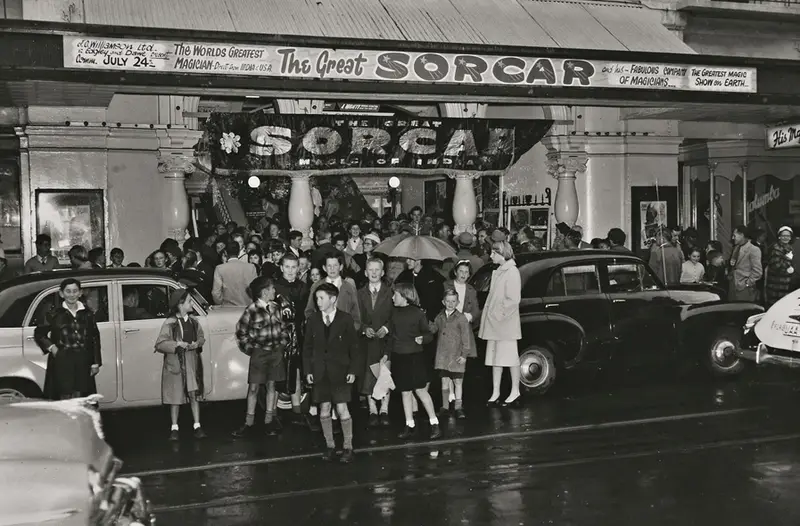
Crowds line up to see The Great Sorcar — "Magic of India."
Sorcar died in 1971 — fittingly, right after stepping off stage in Japan, heart giving out at 57. Prime Minister Indira Gandhi called it the end of a glorious chapter. India named a street in Kolkata after him. His son, P.C. Sorcar Jr., picked up the robes and kept going, eventually making the Taj Mahal "disappear" for two minutes and vanishing an entire train full of passengers at a railway station.
The dynasty is still going.
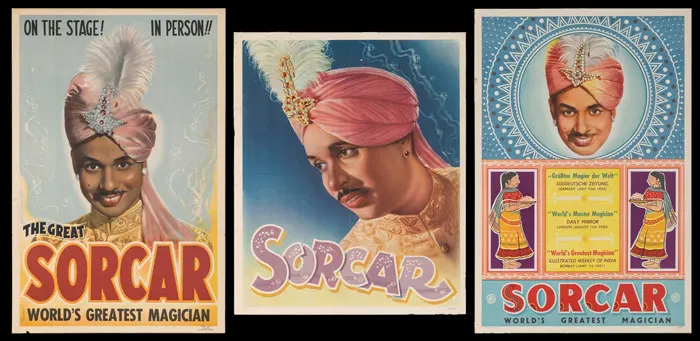
But what sticks with you about Sorcar Senior isn't any single trick. It's the image of a man from a small Bengal town standing in front of a BBC camera, in full silk regalia, completely unbothered — daring the world to underestimate him one more time.
They never really recovered from it.
Visit Our Mini Magic Museum
See vintage Sorcar posters alongside rare magic artifacts at San Francisco's only magic museum — included free with every show.
Book Tickets