
Magic Museum
Dante the Magician: Six Hours to Get Out of Berlin
On September 1, 1939, the greatest magician in the world was in Berlin when he heard the news: Hitler had invaded Poland. He had six hours to get out.
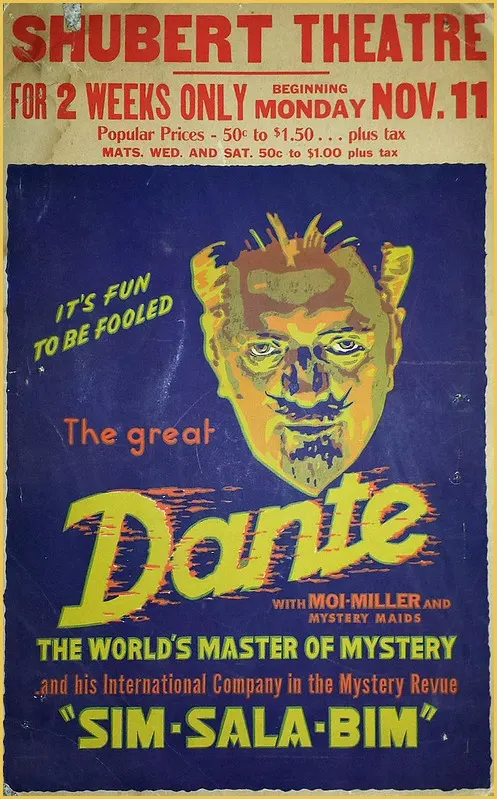
On September 1, 1939, the greatest magician in the world was in Berlin when he heard the news: Hitler had invaded Poland.
He had six hours to get out.
His name was Dante, born Harry August Jansen in Copenhagen in 1883, raised in Minnesota, and by that moment the reigning king of stage magic. His show, Sim Sala Bim, was a touring spectacle of nearly 40 performers, tons of illusions, and enough trunks to fill a cargo hold. For over a decade, he had crisscrossed the world performing to packed houses in Buenos Aires, London, Moscow, Paris, Amsterdam, Bonn. He was living the glamorous life of a Danish American gentleman conjuror.
And now the border was closing.
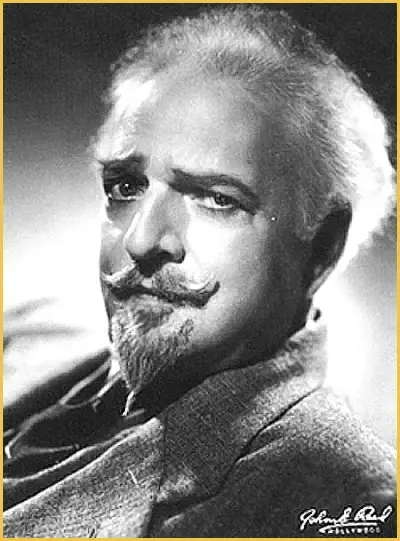
Harry August Jansen — known on stage as Dante.
Dante and his troupe scrambled north. They made it to Sweden before the door slammed shut behind them, but the show, as he'd known it, was over. He had to disband the troupe. He abandoned forty pieces of luggage along the way, props and costumes and machinery he'd been accumulating for years. Decades of craft, left behind in a Berlin that was about to descend into something unspeakable.
There's an ironic footnote here, too. Dante's famous catchphrase, Sim Sala Bim, was a bit of nonsense pulled from an old Danish lullaby his mother used to sing. At that exact moment, a German magician named Kalanag was claiming he'd invented it. Kalanag, it turned out, was performing magic shows for Hitler at the Berghof. While Dante fled, his own signature words were being stolen by a man entertaining the very regime forcing him out.
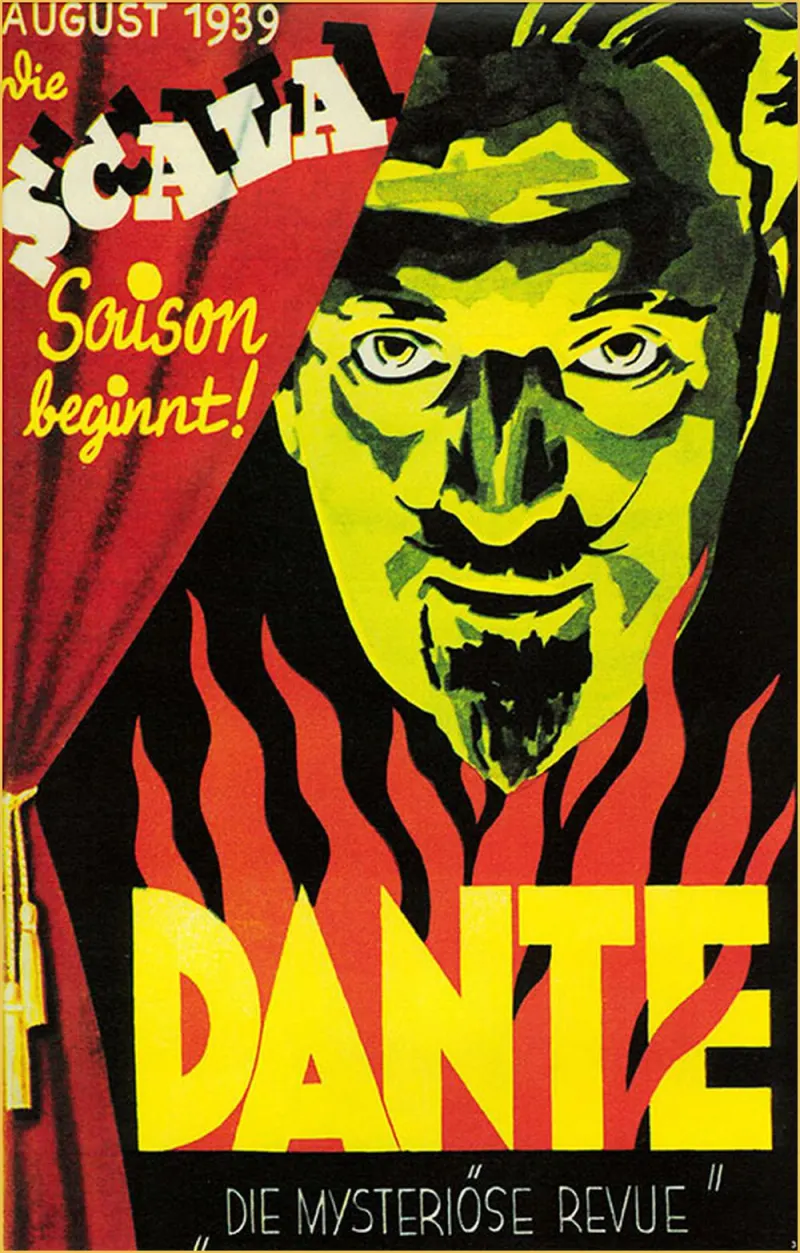
Berlin, August 1939 — weeks before Dante would have six hours to flee.
From Sweden, Dante made it to a ship bound for America. He had his family with him, and his star assistant, the Australian beauty Moi-Yo Miller. The crossing should have taken a week. It took twelve days. The ship zigzagged across the Atlantic the entire way, trying to stay ahead of German submarines hunting in packs. Dante was 56 years old. He'd spent his life making things disappear on stage. Now he was trying very hard not to disappear himself.
They made it.
He landed in California and settled on a ranch in the San Fernando Valley, a place he'd eventually call Rancho Dante. Most men his age, having lost their whole operation, might have called it a career. Dante gave himself exactly one year.
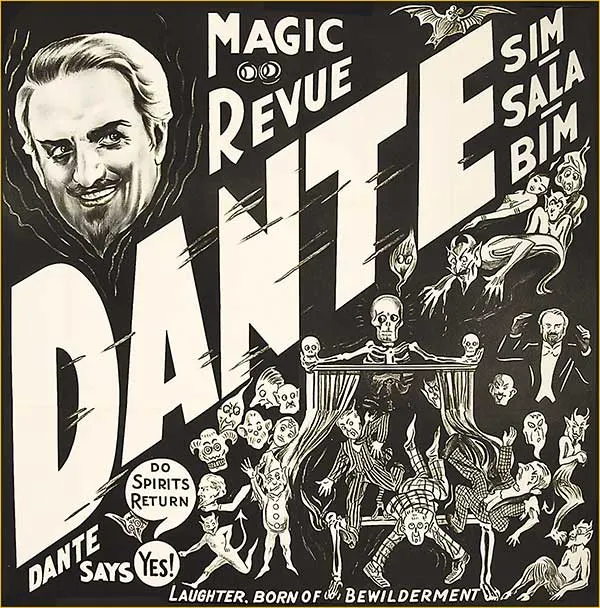
Within twelve months, he had rebuilt the show. Rehired assistants. Redesigned illusions. And in 1940, he opened Sim Sala Bim on Broadway at the Morosco Theater. The critics were stunned. Other magicians were stunned. He had somehow taken everything he'd lost and rebuilt it bigger, sharper, more dazzling than before. It became one of the greatest magic shows ever mounted in America.
Two years later, he was in Hollywood, starring alongside Laurel and Hardy in A Haunting We Will Go.
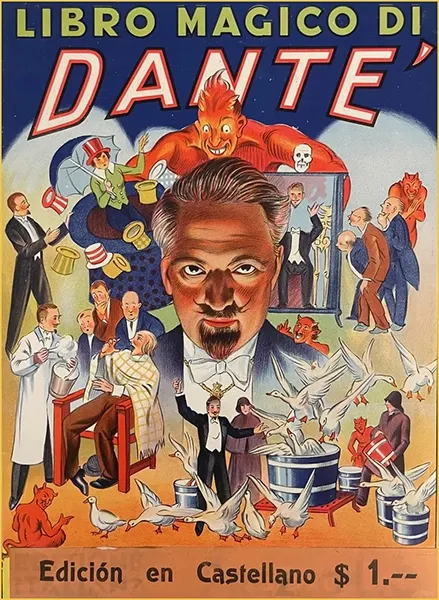
Dante died in 1955 at his ranch, quietly, of a heart attack. Historians call his death the end of the Golden Age of Magic. He deserves that honor for a lot of reasons: the craftsmanship, the showmanship, the global reach. But the story that sticks with me is the one from 1939.
A man in silk and a top hat, with a cigar and a cane and a troupe of forty, watching his life's work become impossible overnight. Six hours to leave. A dozen days on a zigzagging ship. A year to rebuild from nothing.
Magic is supposed to be about making impossible things happen. Dante had already done it before he ever stepped back onto a stage.
Visit Our Mini Magic Museum
See vintage Dante posters alongside rare magic artifacts at San Francisco's only magic museum — included free with every show.
Book Tickets